
In countless homes across India, devotion to Laddu Gopal Ji is expressed not only through prayer but through loving daily seva. Because He is worshipped in His child form as Krishna, devotees naturally treat Him like a cherished little one — bathing Him, feeding Him, and dressing Him with care. Among all aspects of laddu gopal ji shringar, the choice of fabric holds special importance. Traditional Fabrics for Laddu Gopal used in laddu gopal ji poshak are not selected merely for beauty; they reflect comfort, season, culture, and devotion.
Traditional Fabrics Used in Laddu Gopal Ji Dresses
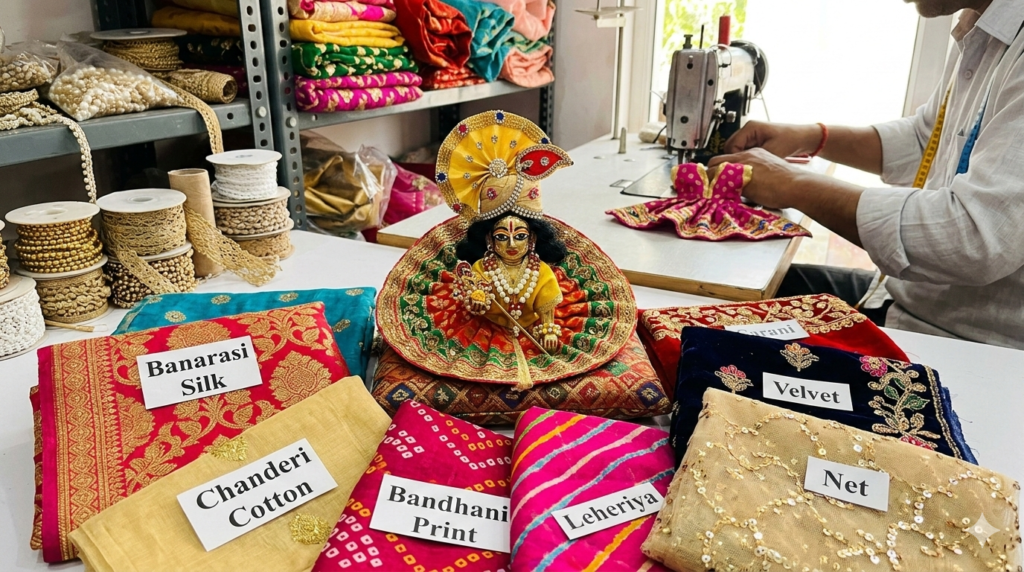
–> Explore a beautiful collection of handcrafted laddu gopal ji poshak, laddu gopal dresses, and laddu gopal ji accessories at Shri Sringar, designed to make every laddu gopal ji shringar truly divine.
Let us explore the timeless fabrics that have adorned laddu gopal dresses for generations.
1. Pure Cotton – The Fabric of Simplicity and Comfort
Cotton is one of the most commonly used fabrics for laddu gopal ji poshak, especially for daily wear. Its soft texture and breathable nature make it ideal for warm climates.
In many Indian homes, simple cotton laddu gopal dresses are preferred during summer months. The fabric absorbs moisture, keeps the idol cool, and feels light. Mulmul cotton, in particular, is gentle and airy — making it one of the most loved Traditional Fabrics for Laddu Gopal and perfect for ensuring that Laddu Gopal Ji remains comfortable throughout the day.
Cotton also symbolizes purity and humility. Choosing a plain or lightly embroidered cotton dress reminds devotees that devotion is not about extravagance but about sincerity. For everyday laddu gopal ji shringar, cotton remains timeless and practical.
Cotton poshaks can be beautifully paired with minimal laddu gopal ji accessories such as a small mukut, kanthi mala, or light waist belt, maintaining both comfort and grace.
2. Silk – The Royal Fabric of Festive Shringar
When it comes to festivals, silk becomes the fabric of choice for grand laddu gopal ji shringar. Known for its natural sheen and smooth texture, silk has always been associated with royalty and celebration.
During Janmashtami, Diwali, and other auspicious occasions, devotees often dress Laddu Gopal Ji in silk laddu gopal ji poshak decorated with zari, gota, or fine embroidery. The richness of silk reflects the divine status of Krishna as the King of hearts.
Bright silk laddu gopal dresses in shades like yellow (pitambar), peacock blue, and deep red beautifully enhance the festive appearance. Despite its luxurious look, silk is soft and drapes elegantly around the idol.
Silk outfits are often complemented with detailed laddu gopal ji accessories such as mor mukut, bansuri, pearl malas, and decorative bangles. Together, they create a complete festive shringar that feels both regal and devotional.
3. Velvet – Warmth for the Winter Season
As seasons change, so does seva. During winter, velvet becomes a preferred fabric for laddu gopal ji poshak.
Velvet is thick, soft, and warm — ideal for colder months. Devotees who view Laddu Gopal Ji as a living child naturally adjust His wardrobe according to temperature. Just as a parent would protect a child from cold weather, velvet laddu gopal dresses are chosen to offer symbolic warmth.
Deep jewel tones like maroon, royal blue, emerald green, and purple look especially beautiful in velvet. These winter outfits are often enhanced with golden embroidery and paired with cozy shawls or caps as part of seasonal laddu gopal ji shringar.
Adding winter-themed laddu gopal ji accessories, such as small woolen wraps or decorative blankets, completes the look while maintaining comfort.
4. Brocade and Banarasi Fabric – Traditional Grandeur
Brocade and Banarasi fabrics carry a legacy of Indian craftsmanship. These fabrics are woven with intricate patterns, often using gold or silver threads, making them ideal for grand laddu gopal ji shringar.
A Banarasi laddu gopal ji poshak gives the deity a regal presence. The detailed motifs — floral vines, paisleys, and traditional patterns — enhance the visual richness of the dress. Such fabrics are commonly used during weddings, temple celebrations, and major festivals.
Because brocade is slightly heavier, it is usually chosen for shorter durations rather than daily wear. However, when paired with elegant laddu gopal ji accessories like kundan jewelry, elaborate crowns, and decorative thrones, the overall look becomes majestic and unforgettable.
These traditional laddu gopal dresses beautifully reflect India’s textile heritage while honoring Krishna’s royal charm.
5. Chanderi and Organza – Light Elegance
For devotees who prefer a delicate and graceful look, Chanderi and organza fabrics are beautiful options for laddu gopal ji poshak.
Chanderi is lightweight with a subtle sheen, making it suitable for both regular and festive wear. Organza, being sheer and crisp, adds a soft layered effect to laddu gopal dresses when styled thoughtfully.
These fabrics create a gentle and ethereal appearance that complements Laddu Gopal Ji’s childlike innocence. Pastel shades, floral prints, and minimal embellishments enhance the elegance of this style of laddu gopal ji shringar.
Lightweight fabrics also allow easy pairing with subtle laddu gopal ji accessories without making the outfit look heavy or overwhelming.
Choosing Fabric with Devotion and Awareness
While tradition guides fabric choices, comfort should always come first. Since Laddu Gopal Ji is worshipped in the child form, devotees naturally consider:
Season and temperature
Softness of the material
Weight of the fabric
Ease of draping and changing
Whether selecting daily cotton laddu gopal dresses or festive silk laddu gopal ji poshak, the intention should be care and love.
Seva should feel tender, not complicated. A simple outfit offered with devotion carries as much spiritual value as an elaborate one. Clean stitching, proper fitting, and thoughtful styling with balanced laddu gopal ji accessories ensure that the overall laddu gopal ji shringar looks neat and graceful.
The Spiritual Meaning Behind Traditional Fabrics
Every fabric used in laddu gopal ji poshak carries symbolic meaning:
Cotton reflects simplicity and humility.
Silk represents celebration and divine royalty.
Velvet expresses warmth and protection.
Brocade symbolizes heritage and grandeur.
Chanderi and organza embody grace and softness.
When devotees thoughtfully select fabrics for laddu gopal dresses, they are not merely choosing textiles. They are expressing emotion through texture, color, and tradition.
Ultimately, the most important element in any laddu gopal ji shringar is bhav — the feeling behind the offering. Whether adorned with simple cotton and minimal laddu gopal ji accessories or dressed in grand silk attire for a festival, what truly matters is love.
Traditional fabrics continue to hold their place because they beautifully connect culture, comfort, and devotion — weaving faith into every thread.