
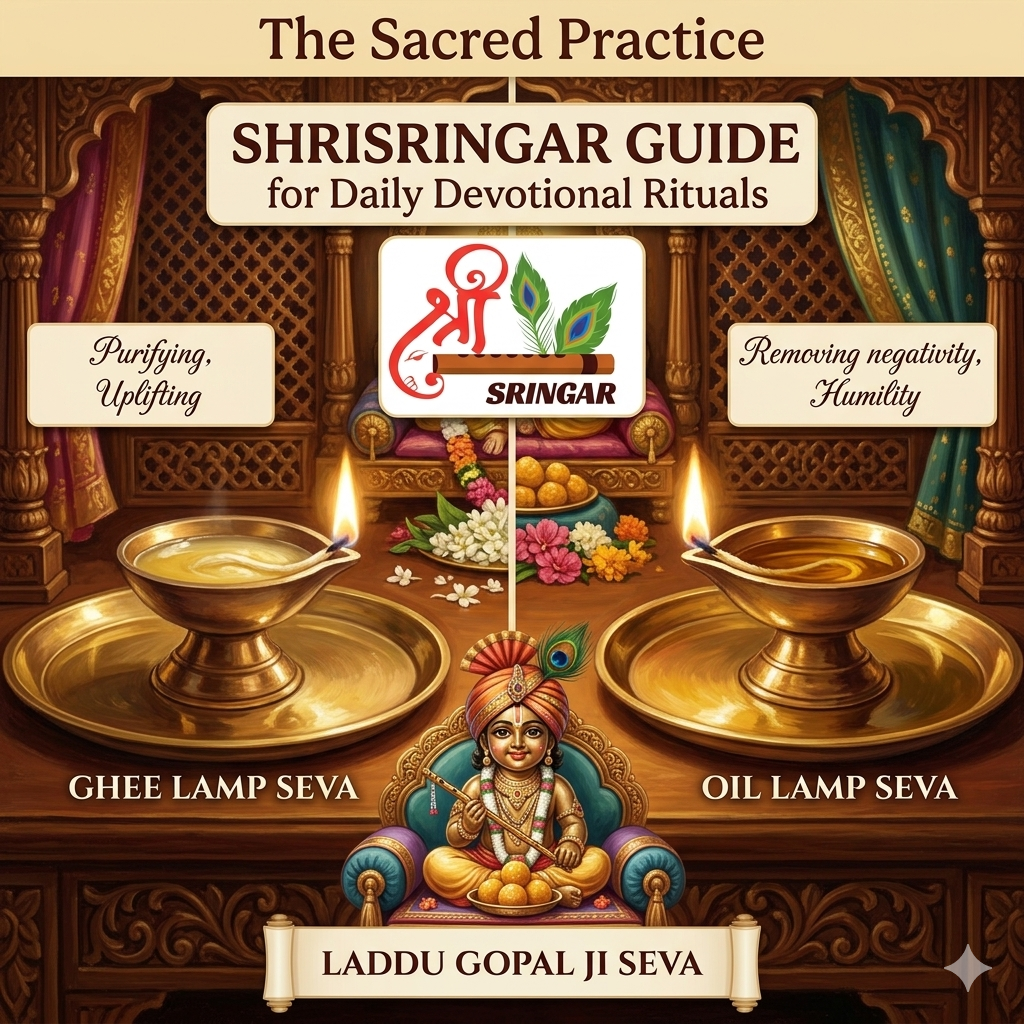
Ghee lamp worship benefits Daily seva is filled with loving details. Devotees offer clothes, ornaments, flowers, bhog, and sacred light during worship. Among these offerings, lighting a lamp holds special meaning because it brings purity, peace, and devotion into the altar space.
Many devotees ask whether an oil lamp or a ghee lamp is better for daily worship. Both are used in traditional rituals, and both have spiritual value. However, each serves a different purpose in shrisringar.
This guide explains the difference in simple English. Moreover, it helps you choose the right lamp for devotional rituals.
Why a Lamp Is Important in Seva
Lighting a diya is often the first step in worship. It represents divine light and the removal of darkness.
Before offering bhog, arranging a Laddu Gopal jewelry set, or placing flowers on the altar, many devotees first light a lamp. As a result, the mandir feels calm and sacred.
Moreover, a diya improves focus during prayer. In addition, it enhances the beauty of shrisringar. Most importantly, the lamp is not only decoration, but it is also an offering of devotion.
What Is an Oil Lamp?
An oil lamp is a diya filled with oil and a cotton wick. Once lit, it gives a steady flame. Because oil burns slowly, these lamps often last longer.
Common oils include:
- Sesame oil
- Mustard oil
- Coconut oil
Therefore, many devotees prefer oil lamps for regular use.
Benefits of Using an Oil Lamp
1. Good for Daily Worship
Oil lamps are practical for routine morning and evening seva. Therefore, they are often used every day.
They are also placed beside the altar along with Laddu Gopal accessories used in daily shrisringar.
2. Longer Burning Time
Oil usually burns for a longer period. As a result, it suits extended puja and akhand diya practices.
3. Steady Flame
The flame is often stable. Because of this, oil lamps work well for regular rituals.
4. Traditional Choice
Many families have used oil lamps for generations. Thus, they hold traditional value as well.
What Is a Ghee Lamp?
A ghee lamp uses pure cow ghee instead of oil.
A cotton wick absorbs the ghee, and then the diya is lit. As a result, the flame is often bright and soft.
Because of its purity, a ghee lamp is often preferred in special worship.
Benefits of Using a Ghee Lamp
1. Sacred and Pure
Many devotees consider ghee a pure offering. Therefore, it is often used in important rituals.
During festival shrisringar, after dressing Laddu Gopal Ji in festive attire, a ghee lamp is offered in aarti.
2. Beautiful Flame
A ghee lamp gives a warm golden glow. Consequently, it makes the altar look radiant.
3. Ideal for Festivals
Ghee diyas are often used on:
- Janmashtami
- Ekadashi
- Kartik month
- Diwali
Furthermore, they are common in special family pujas.
4. Creates a Devotional Mood
Many devotees feel the atmosphere becomes calm and uplifting. As a result, prayer feels more focused.
Oil Lamp vs Ghee Lamp: Main Differences
Although both are sacred, they differ in practical use.
Burning Time
Oil lamps often burn longer.
Meanwhile, ghee lamps may need refilling sooner.
Flame Quality
Ghee often gives a brighter flame.
In contrast, oil offers a steady flame.
Daily Use
Oil is common in regular worship.
However, ghee is often chosen for special occasions.
Traditional Meaning
Oil can symbolize discipline.
On the other hand, ghee often symbolizes purity.
Which Lamp Is Better for Daily Seva?
There is no single rule.
If you want a practical lamp for everyday worship, an oil lamp may be suitable. However, if you want a sacred offering for special devotion, a ghee lamp may be ideal.
Some devotees use both. In fact, this balanced approach is common.
For example:
- Morning shrisringar with ghee lamp
- Evening aarti with oil lamp
Therefore, many devotees prefer this method.
When to Use an Oil Lamp
An oil lamp may be a good choice when:
- You perform daily puja
- You need long burning time
- You do regular evening aarti
- You maintain continuous diya seva
It also works well in seasonal worship, whether the deity is adorned in Laddu Gopal summer dress cotton during warm months or other simple daily attire.
When to Use a Ghee Lamp
A ghee lamp may be better when:
- You perform festival worship
- You offer special shrisringar seva
- You do sacred aarti
- You want an auspicious devotional offering
For example, many devotees light ghee lamps when offering a beautifully handmade Laddu Gopal dress during special occasions.
Can You Use Both Lamps Together?
Yes, you can.
In fact, many devotees do.
An oil lamp supports routine worship. Meanwhile, a ghee lamp adds beauty to festive seva.
Together, they can complete the devotional setting.
Choosing the Right Diya
The lamp material also matters.
Brass Diya
Brass diyas are durable and traditional. Therefore, they are often used for daily worship.
Clay Diya
Clay lamps are simple and sacred. Likewise, they are common during festivals.
Silver Diya
Silver diyas are often used in elegant shrisringar.
Some devotees pair these with items chosen from Laddu Gopal shringar items online collections to create a coordinated altar.
Whatever you choose, keep the diya clean. Because cleanliness supports discipline, it also supports devotion.
How to Light a Lamp in Seva
Follow simple steps:
Use a Fresh Cotton Wick
Always use a clean wick.
Use Pure Oil or Ghee
Good quality ingredients support proper offerings.
Place the Lamp Safely
Keep it stable in the mandir.
Offer With Devotion
Most importantly, light the lamp with bhav. That gives meaning to the ritual.
Common Mistakes to Avoid
Even simple rituals need care.
Using Impure Ingredients
Avoid poor-quality oil or ghee.
Not Cleaning the Diya
Residue can build up over time. Therefore, clean the lamp regularly.
Choosing Only for Decoration
Beauty matters in shrisringar. However, devotion matters more.
Ignoring Practical Needs
Choose a lamp that suits your routine. As a result, seva becomes easier.
Seasonal Seva and Lamp Choice
Some devotees also match lamp use with seasonal worship.
During colder months, when Laddu Gopal winter dress is used in shrisringar, ghee lamps are often preferred for their warm devotional glow.
However, during regular daily worship, oil lamps may remain practical.
Thus, this depends on family tradition and preference.
Oil Lamp vs Ghee Lamp for Laddu Gopal Seva
For Laddu Gopal worship, many devotees follow this pattern:
Use ghee lamps for:
- Morning shringar
- Festival aarti
- Special bhog offerings
Use oil lamps for:
- Daily worship
- Evening diya
- Long burning rituals
Some devotees also coordinate lamp offerings while selecting attire through Laddu Gopal dress online India collections for festival preparations.
Others prefer simple traditional selections over modern Laddu Gopal dress online shopping choices. However, personal seva style always matters most.
Which One Should You Choose?
Choose an oil lamp if you want:
- Long-lasting flame
- Daily convenience
- Traditional routine use
Choose a ghee lamp if you want:
- Sacred festive offerings
- Bright devotional glow
- Pure symbolic value
Choose both if you want the benefits of both. In many cases, that is the simplest option.
Final Thoughts
The choice between oil lamp vs ghee lamp depends on your seva style.
Oil lamps are practical, steady, and ideal for daily rituals. Meanwhile, ghee lamps are sacred, beautiful, and ideal for special devotion.
Therefore, both have value in shrisringar.
In the end, the most important thing is not the lamp itself. Rather, it is the devotion behind the flame.
Whether you offer oil or ghee before the deity, offer it with faith, love, and purity. Then every diya becomes sacred.
–> Explore beautiful Laddu Gopal Ji poshak, dresses, and shringar accessories at Shri Sringar to lovingly decorate your home mandir with devotion and elegance.